
In this article
It is evening. You close your laptop and settle in at home. Perhaps you put on a record, or light an incense stick you enjoy. Small preparations like these give the time that belongs to you a beginning.
If meditation first drew your attention to incense, you may wonder why anyone lights it simply to sit quietly. In some Chinese Chan traditions, burning incense has marked periods of sitting.[3] Chinese poetry and painting offer another scene: someone at leisure, enjoying a fragrance and the world around them.
Incense is not essential to meditation. What interests us here is this other pleasure: giving a little care to time spent alone.
A fragrance to enjoy, a landscape to seek
The Tang poet Zhang Ji writes in a poem about Mr Li’s secluded home:
“With nothing to attend to, he sits and burns incense;
at times, he walks in search of bamboo.” [1]
The two small pleasures sit side by side: something worth staying for, and somewhere worth walking to. The poem’s subject lives in a thatched house outside the city. The refinement of his life lies in what he chooses to make time for. Sitting and walking each have their pleasures; fragrance and bamboo both deserve a moment of their own.
There is something appealing about this leisure: room to notice a scent, pay attention to plants, or do something without being hurried. The poem imagines a life apart from worldly busyness, but its pleasures remain familiar. You might take the longer route on a weekend walk because it passes a tree you love, or keep an evening free simply because you like spending it that way.
This is one of the subtleties we value in Chinese incense culture. Care for everyday life can belong to an ordinary day, with no guests expected and nothing special to celebrate.

Sitting with incense beside a mountain stream
A Song dynasty painting in the Palace Museum, Incense Burning among Bamboo, offers another scene. The museum describes distant hills, a winding stream and a figure sitting cross-legged on a rock, quietly burning incense. [2]
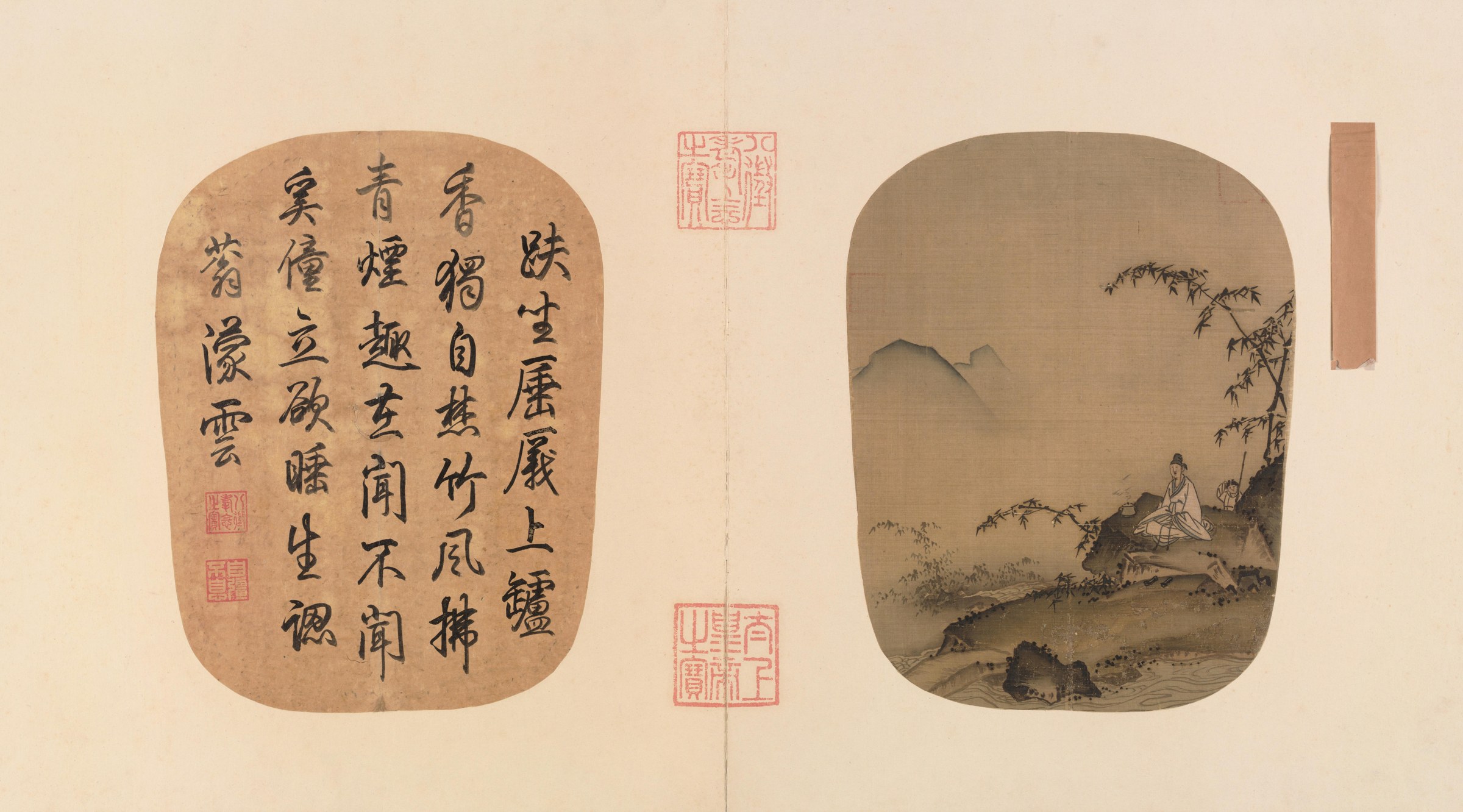

What draws us in is the way fragrance and landscape share one person’s moment. We cannot see a scent, but the place where the figure has stopped helps us imagine the appeal of his time there: a stream and hills to look at, with incense for company.
Read alongside Zhang Ji’s poem, the painting suggests a shared pleasure. Burning incense belongs with appreciating the surrounding world. Even when you are still, there is something to smell and something to see.
That gives home fragrance another dimension today. Scent can be part of a setting, alongside the light at a window and a little time alone. A city apartment need not resemble a mountain retreat. What travels across the centuries is the willingness to stop and appreciate what is there.

A place for an incense stick in life today
The incense in these poems and paintings cannot simply be identified as today’s incense sticks. What we take from them is an attitude to leisure.
Lighting a stick today can be a personal choice: you enjoy the fragrance, and you enjoy preparing a little for the time ahead. We would keep it for moments when you actually want to sit for a while, rather than make it another daily obligation.
You might sit quietly or look out of the window. There is no result to achieve, and no need to use a stick of incense as a test of how calm you feel. It offers a fragrance to appreciate. How you spend the time is still yours to decide.
Zhang Ji’s pairing of sitting with incense and walking in search of bamboo is especially appealing. There is pleasure in being still, and pleasure in going out to meet the world. In this small glimpse of Chinese incense culture, solitude has texture, and everyday life offers beauty worth making time for.
When burning incense, ventilate the room, use a stable, heat-resistant holder that catches ash, and keep it attended. If your sitting practice keeps you from monitoring the ember, enjoy the incense at a different time.
Sources & notes
A poem, a museum record and an account of Chan practice inform this article. Our connection between these examples and contemporary home fragrance is an editorial interpretation.
- Zhang Ji, On Mr Li's Secluded Home, Quan Tang Shi, volume 384Wikisource: transcription of a historical text
The quoted couplet and the thatched home outside the city. English translation by Quiet Xiang. Read as poetry, not a record of every Tang household; the transcription was not collated against a facsimile.
- Anonymous Song artist, Incense Burning among BambooThe Palace Museum; catalogue text by Yang Danxia
The work’s attribution to the Song dynasty and the described hills, stream and seated figure burning incense. The connection to contemporary home fragrance is our interpretation.
- Chan Magazine, Autumn 2015: editor's introduction, pp. 4-5Chan Meditation Center
An institutional account of timing sittings with incense in Chinese Chan practice. It does not establish an origin date, a universal practice or a fixed burn time.
Quiet Xiang Editorial conducted an internal source review of the cited text, museum record and published practice account. Connections to leisure and contemporary fragrance are our interpretation, not meditation-benefit findings or first-hand testing. The three contemporary lifestyle images are AI-generated illustrations with unlit incense, not customer or product photographs. The historical painting is a separately credited scan, not an AI reconstruction. Our editorial approach.